The direction the Star Wars franchise has been heading into starting with The Mandalorian in 2019, has been nothing short of impressive. The Book of Boba Fett further builds on the foundations set up by the previously mentioned show and expands on it perfectly.
Like The Mandalorian, the events of Boba Fett take place directly after 1983’s Return of the Jedi, even going so far as to show how the title character (once again portrayed by Temuera Morrison) emerged from his seemingly original doom from the sar lac in Jedi. Eventually with the help of assassin Fennec Shand (Ming-Na Wen), Fett rises to a position of power in the place of the notorious Jabba the Hutt.
There’s plenty of side stories, and characters new and old that fans of the original series should appreciate, including Luke Skywalker himself (Mark Hamil and Graham Hamilton), and yes, even Grogu, a.k.a. baby Yoda. I was exceptionally elated to see appearances by former Suicidal Tendencies bassist Stephen “Thundercat” Brunner (whom I had the pleasure of personally meeting back in 2010), and Jennifer Beals, who still looks as good as she did when she first threw on those leg warmers for Flashdance back in the early ’80s.
Look, I’ve never been one of those unforgiving nerds with high expectations with each and every franchise they follow religiously (in fact, Star Wars has always been one of the few of its kind I even bother following at all). But for the most part, I think what Disney has been producing here lately has put the franchise back on the right track, and you can’t really ask for much more than that.
The makings of a good horror movie can be subjective. Within multiple horror subgenres exists a consensus of “greats ones” or influential classics that made an undeniable cultural impact. When trying to examine my own love of horror films, I’ve found excitement to be a prime motivating factor.
Danger, mystery, and suspense coupled with a dark, brooding atmosphere are perfect elements of any effective horror film. The creative ingenuity displayed in horror from the past hundred years is a remarkable testament to the human spirit. The sheer talent behind and in front of the camera throughout the twentieth century is overwhelming to consider. Today, we’re fortunate enough to witness horror from its infancy in the silent era to the movies of today.
Different things scare different people. Some people don’t like to be scared at all. I’m naturally drawn to the macabre, most likely due to the wealth of ‘80s horror films from my childhood. The 1980s were, after all, when horror was perfected. It’s a known fact. Of course, this wouldn’t have been possible without the springboard of the preceding decade’s “New Hollywood” movement that saw a new generation of filmmakers shifting control of studio system to a more independent, artistically driven one.
Before such notable times, Alfred Hitchcock’s Psycho (1960), George A. Romero’s Night of the Living Dead (1968), and Roman Polanski’s Rosemary’s Baby (1968) singlehandedly changed the suspense/horror landscape, and studios took notice. The ‘70s gave us The Exorcist (1973), The Texas Chain Saw Massacre (1974), Jaws (1975), and Halloween (1978), among others. These were serious films that made serious amounts of money, while leaving their mark as cultural milestones.
John Carpenter’s Halloween soon became the most successful independent film of its time. Carpenter followed with a string of hits that included The Fog (1980) and Escape from New York (1981). His next and most ambitious film would later stand as one of the greatest horror films ever made and a movie whose initial failure and unfair critical dismissal soured his career for years to come.
Carpenter was heavily influenced by the films of Howard Hawks, whose prolific, multi-genre career spanned decades. In 1951, Hawks produced a film adaptation of John W. Campbell’s 1938 science-fiction/horror novella Who Goes There? called, The Thing from Another World. This influence can be seen during scenes in Halloween, whereblack & white clips from the movie are shown on TV. Carpenter was initially reluctant to direct a new version of Campbell’s classic novella after being approached by Universal. But he soon realized the potential of updating the story for modern audiences and put his entire directorial forces behind it.
Much like the original story, John Carpenter’s The Thing takes place on an Antarctic outpost besieged by a shapeshifting alien monster unwisely unearthed from its frozen state by curious scientists. The alien has no known identify or feature. It simply consumes, absorbs, and replicates every living thing around it. Carpenter’s version focuses heavily on atmosphere, utilizing the isolated, secluded backdrop to its fullest. The ominous score by Ennio Morricone is also the first time Carpenter didn’t do the music himself, though he did contribute.
Kurt Russell leads a talented cast of twelve men as no-nonsense helicopter pilot R.J. MacReady, based on meteorologist McReady from the original novella. He’s joined by the great Keith David as Childs and Wilford Brimley as Blair, the chief surgeon. Fear and paranoia overtake the men as they soon realize that the alien has infiltrated their ranks. Anyone of them could be the Thing, and there’s no way of telling. The alien is relentless in its objectives. It also has the added advantage of fully existing within in a single drop of blood.
The Thing’s groundbreaking special effects were dismissed by critics at the time as nothing more than a grotesque spectacle. Carpenter had tapped Rob Bottin, a young, ambitious make-up effects artist known for his work in Joe Dante’s The Howling (1981). It’s said that Bottin spent an entire year creating the shape-shifting effects for The Thing. Such dedication shows, as the results remain some of the best and most horrific creations ever captured on film. Bottin would go on to work Robocop (1987) and Total Recall (1990), among other films before strangely disappearing from movies altogether.
After years of struggling with its initial failure, Carpenter has said that he considered The Thing his personal favorite of all his films. I agree, and I’m grateful that it has received the recognition it deserves. It’s a serious horror film. There’s little to no humor, the threat is real, and the nihilistic ending remains legendary. It’s also a work of art, created by a filmmaker in his prime. If you’re looking for a good horror movie, there’s no better place to start than this 1982 masterpiece.
Although I’ve seen two of the bands he fronted during his lifetime (Black Sabbath and Dio Disciples, a group made up mainly of former members of the Dio band), and have been lucky enough to even meet his former wife/manager Wendy Dio, I regrettably never had the chance to catch the incomparable Ronnie James Dio while he was still with us on this Earth.
This long overdue, posthumous autobiography, Rainbow in the Dark, describes the first half of the life of one of rock’s greatest warriors with amazing detail. From forming the foundations of early groups like Elf and Rainbow, to reaching epic proportions with Sabbath and Dio, it’s a fascinating look into the life of one of rock’s last true class acts.
Wendy Dio also helps add some personal insight along the way as well; whether discussing tumultuous break ups with former bandmates and business partners such as Ritchie Blackmore and Tony Iommi, or the invention of the “devil horns” in those early Sabbath days, everything is covered perfectly. The only downfall? Unfortunately the story ends (as it also begins) in 1986, with Dio rising to the heights of headlining Madison Square Garden. Although it does make for a perfect ending story wise, it does leave more to desire. One can only hope there is more material out there for a part two, and the gap is eventually bridged.
I wasn’t around in the ’70s, so my first impression of actor Howard Hesseman did not come from the hit TV show WKRP in Cincinnati as it had for many before, but instead the ’80s high school sitcom Head of the Class. As a kid at the time with four older brothers and sisters, all mostly high school aged by then, it was easy for me to fall in love with the show and relate to its characters, who I was able to equate to my older siblings. And it was just as easy for me to picture Hesseman’s portrayal of Charlie Moore as someone who could have just as easily been a teacher of mine as well.
Originally a native of Oregon, he rose to prominence in the ’60s as a member of the improv comedy troupe The Committee, as well as an underground DJ for a San Francisco-based radio station, a job that would no doubt help shape his eventual iconic role as Dr. Johnny Fever on WKRP. By 1968, he landed acting gigs in his first film Petulia, and first TV show, a memorable appearance on the hit police show Dragnet.
Throughout the ’70s, he continued to make notable appearances on such classic shows as Sanford and Son, Laverne and Shirley, and The Bob Newhart show, before eventually landing the career-changing role on WKRP in 1978, a job that would keep him occupied until 1982. By the ’80s he was appearing in such big name films such as Clue (1985) and, one of my personal favorite films of all time, 1984’s This is Spinal Tap.
Hesseman also appeared in what would eventually become my favorite Police Academy film (something I would even relay to series producer Paul Maslansky when I spoke to him last year for Rewind It Magazine), 1985’s Police Academy 2: Their First Assignment, before landing the Head of the Class role the following year in 1986 (which would last until 1990).
When I also spoke to actress and Head of the Class co-star Khrystyne Haje last year for Rewind ItMagazine, she had nothing but praise when it came to her time working with Hesseman, stating; “I always admired Howard’s work, and he became just such a mentor to us all. He’s not only a gifted actor, but he’s also a great comedic actor, and was a great example to me as well. He was really invested in the character he played, and it was an honor to get to work with him.”
Hesseman continued acting well into his 70s, both revisiting his role as Dr. Johnny Fever again on The New WKRP in Cincinnati in the early ’90s, and replicating it via several appearances on That’70s Show in 2001. His last television appearance was on a 2017 episode of the ABC comedy Fresh off the Boat. He passed away just two days ago on January 29 due to complications from colon surgery. He left behind a wife of 33 years, Caroline Ducrocq, and a void in the entertainment world like few others. He will be missed dearly by many for years to come.
Some bands and musicians I will never tire of no matter how old I get; Iron Maiden is one of those bands. Each and every time I revisit their catalog, I’m instantly transported back to being that fifteen year old kid, still trying in earnest to figure out any and every Steve Harris bassline I could in my old bedroom. And when I finally saw the band live in 2011 after years of admiration, I must have had the most visibly dopey smile around that night as I sat in the audience in complete awe.
So it didn’t take much to get me through the door at The Plaza Live for frontman Bruce Dickinson’s Orlando stop on his new spoken word tour, which just kicked off this week here in Florida. While worlds away from a Maiden or even solo performance, the charismatic singer spent the evening going through both his professional and personal life experiences with enough energy and one-liners to rival just about any stand up comedian.
Beginning with his early life and leading up to his joining bands like Shots and Samson during his college years, he eventually lead up to his induction into Iron Maiden and many of the adventures that naturally came with it, using slides along the way like a professor teaching his course. Of course he also discussed his career as an airline pilot and battle with cancer as well. But don’t expect to hear much singing at these shows; aside from brief a cappella lines from “Run to the Hills” and The Beatles’ “Let It Be” weaved within his storytelling, there was not a whole lot of it to be found.
After a brief intermission, where the video for the latest Maiden single, “The Writing on the Wall,” was displayed, Dickinson returned to answer questions from fans who turned in handwritten cards handed out before the show. This lead to some of the night’s most comical moments, with one particular, KISS vs. Slade inquiry posed from a Liverpool fan being one of the highlights.
I could see this perhaps not going over too well for a mere casual observer. But for a die hard fan, it was just the right amount of history (although I must confess, I was already familiar with many of his stories, having already read his autobiography). Dickinson has no doubt lead a fascinating life, and if you’re able to go in with an open mind, you might just be glad you did.
I went into the new Scream relaunch/reboot (requel?) admittedly not expecting much at all. But to my surprise, it was actually a much more enjoyable ride than I had imagined; far from a cinematic masterpiece by any means, but an improvement over its past two disastrous predecessors combined nonetheless (they couldn’t just seriously throw a “5” at the end of the title though?! Come on, stop taking yourself so seriously Hollywood).
In this round (which directly follows the events of 2011’s Scream 4), a new group of Woodsboro teens, many with their own unique connections to the original town killings, become the targets of yet another Ghostface killer (or killers?), with estranged sisters Sam (Melissa Barrera) and Tara Carpenter (Jenna Ortega) at the center of it all. When Sam and her new boyfriend Richie (Jack Quaid) enlist the help of former sheriff Dewey Riley (David Arquette), it quickly leads to more faces from the original reuniting and coming to the rescue, including Sidney Prescott (Neve Campbell) and Gale Weathers (Courteney Cox). Even Skeet Ulrich is somehow able to make a brief return as Billy Loomis, but I won’t elaborate any further to avoid spoiling anything.
Long time fans of the series should appreciate all the sly references to the original (as well as other Wes Craven films, including A Nightmare on Elm Street) thrown in, while younger generations should appreciate the more modernized take. The acting isn’t always the greatest, and the gore is at times excessively over the top and unnecessary, but again, this is far from Shakespeare here.
All in all, what directors Tyler Gillett and Matt Bettinelli-Olpin have assembled here is a fairly spot-on homage to Craven’s original work (“For Wes” is promptly displayed over the end credits), and at times I found myself so lost in the plot, I honestly felt like I was that kid sitting in the theater with my friends back in the ’90s all over again. This ship finally seems to be steering in the right direction again; let’s hope those calling the shots keep it that way.
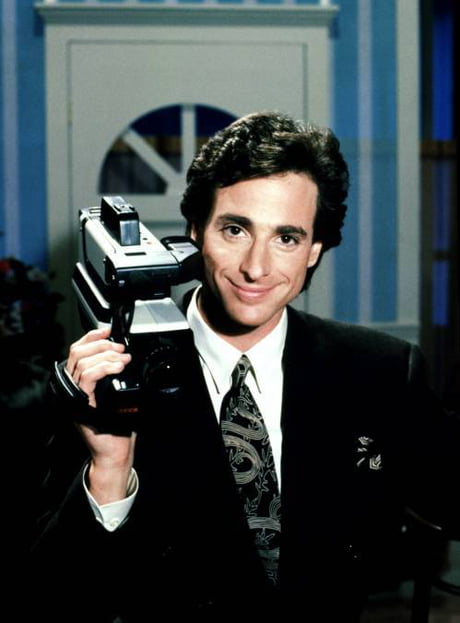
I can remember it like yesterday; gathering around the living room TV set with the entire family every time something new or interesting was set to premiere, long before Netflix or any of the numerous “plus” networks around today. And when shows like Full House and America’s FunniestHome Videos, starring/hosted by funny man Bob Saget, first dropped, I was there to take in everything each had to offer.
Saget was born on May 17, 1956 in Philadelphia, PA, where he attended film school at Temple University. In the early ’80s he appeared in random bit parts in such films and TV shows as Full Moon High (1981) and The Greatest American Hero (1983) before he received his first real “break,” albeit brief, on The Morning Show in 1987, which served as a precursor to his most famous role as morning TV host Danny Tanner on Full House, which premiered on September 22 of that same year. He also appeared alongside legendary comedian Richard Pryor in Condition Critical that year as well.
By 1989, he was America’s favorite dad, so it made sense for him to host America’s Funniest Home Videos that year, the first video clip show of its kind long before YouTube. He would maintain his hosting position up until 1997 (two years after Full House‘s cancellation), leaving big shoes to fill for everyone who has hosted since.
In 1998, he was directing the late Norm Macdonald in Dirty Work, a box office bomb but guilty pleasure none the less. He also made one of the most memorable and talked about cameo appearances to date in Half Baked, also in 1998.
He made his return to TV in 2001 with the short-lived Raising Dad, before landing a recurring role on Entourage starting in 2005, as well as narrating the main character’s voice on How I Met YourMother that year, a gig that would last him until 2014. He also returned alongside many of his former castmates for the Netflix sequel series Fuller House from 2016-2020. Saget’s most recent work was an appearance on Nickelodeon’s Unfiltered last year, and he will also be appearing posthumously in the upcoming film Killing Daniel.
Saget had just begun a stand up comedy tour when, on January 9, he was found unresponsive in his Ritz-Carlton hotel room in Orlando, FL (a forty minute drive from where I write this tribute). I don’t know why I didn’t make more effort to catch his show at the Hard Rock Live just two nights prior, but I had started kicking around interview ideas prior to his tour (something I now regret not pursuing harder).
Although there’s still many unanswered questions regarding the circumstances of his death, one thing is for certain; Saget leaves a hole in the hearts of many of us. His passing comes just days after the loss of loveable Golden Girl Betty White, and both loses are prime examples of not knowing what one has until it’s gone. Both Bob and Betty were special in their own unique ways, and their legacies are sure to stand the test of time.
Like many, I too was excited for yet another new season of the hit series Cobra Kai. But even with some returning familiar faces, the show unfortunately feels more tiresome and strained than ever before this time around.
It starts off promising, albeit predictable enough; John Kreese (Martin Kove) recruits his former partner and Cobra Kai co-founder Terry Silver (Thomas Ian Griffith, who returns to the franchise for the first time since 1989’s The Karate Kid Part III) to compete with Johnny Lawrence (William Zabka) and Daniel LaRusso (Ralph Macchio), who have now splintered off back to their own respective dojos.
It’s painfully obvious this season is solely a Netflix production; not only is it dumbed-down to the most low-brow levels possible every chance it gets here, the characters show such little signs of any actual human development. The adults still exude constant unrealistic immaturity, while the teens continue to answer any conflicts with as much whining and/or ridiculously reckless behavior as possible.
It takes until the eighth entry for things to finally start picking up a little, eventually peaking by the tenth and final episode. And of course the door is yet again left ajar for a fifth season, with Silver (hopefully) hinting at the return of Mike Barnes (Sean Kanan) from Part III. But even still, the show has sadly become far too self-aware, and not much more than just a parody of itself; I truly hope it can somehow find its way back on track to being “the best around” by the time the next season drops.
Aside from Batman, Spider-Man has always been one of the few superhero characters that I don’t mind watching on screen. But as just a casual fan, these newer films with Tom Holland as the titular hero have been much harder to enjoy than the early 2000’s films starring Toby Maguire and directed by Sam Raimi.
I’ll try to sum up No Way Home (what’s with all of the “home” references in the title of every one of the Holland flicks, anyway?) as simplified as possible for fellow outsiders such as myself; Spider-Man/Peter Parker is basically hated by the world for the events in the last entry, Far From Home, and enlists the help of Dr. Strange (Benedict Cumberbatch) to erase everyone’s memory of it. In doing so, it allows other previous foes from other dimensions into his world.
It does allow for some exciting moments, and it was interesting to see some of the actors and characters from the Raimi films appear on the big screen again, such as Maguire, Willem Dafoe as the Green Goblin, and Alfred Molina as Dr. Octopus. But eventually it just became as clunky as all of the other ridiculous superhero films these days that I could care less about (like the Avengers or Wonder Woman), and the plot was far too similar to the 2018 animated feature Intothe Spider-Verse. And I get there are people really into these movies, but it’s lost on me how they possibly maintain the time and energy to know all of the ins and outs of all these countless characters and storylines (I’d be exhausted if I tried).
I also made the mistake of taking my kid to see it in 3-D, which is the most absurd and shameless gimmick by Hollywood these days, and not only completely pointless for most films (such as this one), it has completely taken away any magic from the concept entirely. But look, it’s not that NoWay Home is a bad film per se (it was still better than that new Matrix film, something so disappointing I elected not to even review it at all), it’s just not what someone like me is looking for from a Spider-Man movie. I think I’ll just stick to the simplicity of those old Raimi films next time I’m in the mood for one.
Late last year I spoke with legendary actor Monte Markham to specifically discuss his role as Clay Hollingsworth on The Golden Girls for an anniversary piece I was working on at the time for Rewind It Magazine. But with so much more material leftover from our over thirty minute long phone conversation, it felt like a waste not to print the rest (better late than never as they say).
After all, aside from his recurring role on The Golden Girls in the late ’80s/early ’90s, Markham’s acting career spans as far back as the ’60s, appearing on such shows as Mission:Impossible, Hawaii Five-0, The A-Team, Murder, She Wrote, and Baywatch, as well as such classic films as Midway and Airport ’77, just to name a few.
One of the questions I had asked him regarding his appearances on The Golden Girls was how he felt it compared to other TV shows he’s done. He replied; “As an actor I’ve done just about every type of performance you can do. But four-camera sitcoms in many ways are the most difficult to do because, one; it’s comedy, and two; it’s rewritten everyday at rehearsals. And the camera is in your face, but it’s about 20 or 30 yards away, so it’s like you feel like you’re on stage, but there’s an intimacy of the lens, so you have to adjust performance.I did several of them (sitcoms); The Mary Tyler Moore Show was really a good playing ground on them.”
I also asked why he felt this shows have endeared so many years later, and he stated; “Even with a movie you’ve seen numerous times before, why do you find yourself still staying with it? Because it’s a good film. It’s like with The Mary Tyler Moore show; I did the second episode after the pilot, and I can tell you, the cast were all very nervous about it because the guy who had directed the pilot wasn’t available. I remember Lou Grant coming up to me and asking, ‘Is this funny?’ (Laughs), and I reassured him, ‘No, no, it’s terrific!’ But it was that damn good, and that’s why they’re still in reruns around the world constantly. The interesting thing is, rather than just being old, a good show plays to a whole new audience.”
He also explained what he has done since many of his most memorable roles; “In ’92 I was still doing Baywatch in syndication and playing the Captain, which was great. I had an opportunity to form a company with my wife and son, and we did documentary production for A&E, which lead to doing the first shows for The History Channel. And I didn’t know from there we’d be producing, writing, and directing these documentaries for the next twenty years. It was a great ride, and I was able to travel all over the world, but I couldn’t act at that time because it was impossible to schedule anything, since we were always on the road.”
He continued; “Then in about 2010, we figured we had done about everything we could with that, and it was time to bring it in. So I went back into acting, which was very interesting…a whole different time with streaming, and the whole world being able to watch anything at any time. It’s a different business, a different world now. We just recently had a 30th anniversary party for Baywatch after they updated and remixed it, and the color and everything is spectacular. It’s a whole new looking show, but they couldn’t use the same music because it was tied up in all various kinds of licensing, so they had to re-record it.”
The last thing I wanted to know was what his thoughts were on the (embarrassing) 2017 Baywatch remake. He told me; “Well, in general the remake of Baywatch is pretty abysmal. Baywatch (the show) was what it was; sure, it was a lot of T&A and beautiful girls running in slow motion, but also had some really family-oriented, life lessons in there as well…just a lot of lightweight stuff, but it caught on. I remember back when we were doing the pilot, and looking at the real LA lifeguards around on set who were like, ‘Give me a break!’ (Laughs), even though the first two girls they cast could actually swim really well, but then they kind of got away from that. But when they do a remake these days, they throw all of what made it successful in the first place out the door, making it absurd, so it’s like just basically making fun of itself.”