The terms “legend” and “icon” often get thrown around loosely these days, but if there’s one man deserving of such recognition, it’s the one and only Chuck Norris. It’s nearly impossible to describe the entire impact he’s had on the entertainment and martial arts worlds (among many other things) in simply one article, but I’ll do the best I can to lend at least one perspective here.
If you grew up in the ’80s/90s like myself, then surely you remember the days when weekends were filled with macho films in the likes of Missing in Action and The Delta Force overtaking cable networks like TBS. As with Schwarzenegger or Stallone, these movies felt like a rite of passage at the time.
Norris began life as Carlos Ray Norris in Ryan, Oklahoma on March 10, 1940. The oldest of three brothers (his youngest brother, Weiland, was later killed in action in Vietnam), he joined the United States Air Force in 1958, where he was an Air Policeman and first began learning martial arts in the form of Tang Soo Do. After his time in the military, Norris settled in California, where he began competing in martial arts competitions and even started his own karate school.
A brief appearance in the 1968 film The Wrecking Crew lead to his on-screen battle with the legendary Bruce Lee in 1972’s The Way of the Dragon, a breakout moment for him no doubt. The sky seemed to be the limit from then on, with starring roles in the likes of 1977’s Breaker! Breaker! and 1978’s Good Guys Wear Black paving the way to superstardom.
By the 1980’s, Norris was hitting his stride, with Lone Wolf McQuade (1983), Code of Silence (1985), Invasion U.S.A. (1985), Firewalker (1986), and the previously-mentioned Missing in Action and Delta Force films – which each spawned a franchise of their own – solidifying his tough guy reign at the box office. By the early ’90s, Norris was in homes across the nation on the small screen via Walker, Texas Ranger, which ran for eight seasons from 1993-01. (I can remember watching I believe the premiere episode the night it came on at my grandmother’s house when I was still a kid.)
Invasion U.S.A. postcard from the author’s personal collection featuring Chuck Norris and a quote from the 1985 film.
There’s a memory that sticks with me to this day that I always think of whenever discussing Norris. I was maybe twelve years old and in the hospital, having a (very painful) central IV line installed in my arm that was proving easier said than done. In the background on the TV set in my room, Missing In Action 2: The Beginning was playing. Life imitated art at that exact moment, as I watched Norris’ character being tortured on the screen while it felt like I was enduring a type of torture of my very own. Yet I tried to put on my best “tough guy” face, which I like to think was due in part of the bravado that was on my television screen at the time. (Although I’m fairly certain the procedure had me in tears.)
These days there’s so few newer Hollywood action stars that are as noteworthy or comparable as Norris (most of them are unable to capture my attention to begin with, let alone standout in any noticeable way). Chuck Norris was the embodiment of the prototypical American family man and patriot that loved his family, God, and country in a way that we should each strive to (I’m ashamed to admit I did not fully see the merit in such traditional values until far later in life than I wish I had, but am still learning everyday.) The world may have lost an overall great human being by his loss yesterday, but what’s been gained by his presence these past eighty-six years will no doubt prove immeasurable. Rest in peace Mr. Norris, you earned it.
It’s hard to believe that just a few short months ago, we still lived in a world where all four original members of legendary rock outfits Black Sabbath and Kiss were all still walking the earth. Now that has obviously changed quite dramatically, first with the devastating loss of Ozzy Osbourne in July, and now the unmistakable original Kiss guitarist/co-founder Ace Frehley this past week on October 16.
Born Paul Daniel Frehley in The Bronx, New York on April 27, 1951, Frehley first picked up the guitar at the start of the British invasion in the early ’60s as so many of his fellow peers had done around this time. But aside from playing guitar, Frehley also found himself mixed up with rough gangs and earning the nickname “Ace” by the age of 13.
But music was his true calling, and after briefly serving as a roadie for Jimi Hendrix at age 18, he eventually found found his way to the band that would become Kiss in 1972, helping to create something the likes the world had never seen before by 1973, bringing to life the “Spaceman” persona in the band and even designing their now-classic “lightning bolt” logo that can seen in nearly every far corner of the world now.
The rest as they say, is KISStory, with Frehley going on to dominate the ’70s rock world with his bandmates Paul Stanely, Gene Simmons, and Peter Criss. Aside from their trademark makeup and infectious anthems, the group were also known for their theatrics, including Frehley’s oft-smoking guitars that he custom built himself.
But years of hard living took its toll, and by 1982, Frehley became the second original member of Kiss to exit the band. By the late ’80s he struck back hard, with a string of solo albums beginning with Frehley’s Comet in 1987.
After a period of dormancy, Frehley and his former Kiss bandmates took the world off guard when him and Criss made their first appearance with the band on stage in over a decade at an MTVUnplugged tapping in 1995. From then on, it was a full scale reunion, complete with makeup and costumes and all, that lasted into the early 2000’s.
I had really become a fan of Kiss in the early ’90s during the non-makeup years, and can vividly remember watching that MTV Unplugged episode when it first aired. I felt the same excitement that was in the audience that night, and couldn’t wait to see the band in concert (which I had just started going to around this time, staring with AC/DC in 1996).
But it would take a number of years before I would finally see Kiss live in 2012, but which point Frehley had been replaced by his fourth and final follow-up guitarist in the band, Tommy Thayer. But even without him there physically, his presence could still be heard and felt with each and every lick played that night.
Finally, in June of 2024, Ace was set to play at the Hard Rock Live nearby me in Orlando, FL, and I was determined to finally see him, despite it landing on a Friday and being extremely tired from a long day’s work beforehand. I brought my teenaged son Jacob with me, and for the first time ever he was able to hear the music of Kiss played live, with timeless tracks like “Detroit Rock City,” “Cold Gin,” “Shout It Out Loud,” and of course, “Rock n’ Roll All Nite,” all leading the charge (it’s a memory I hold dear now that I won’t soon forget).
Ace Frehley performing with his band at the Hard Rock Live in Orlando, FL on 6/21/24 (Photo by Jesse Striewski).
When it was announced last week that Frehley had passed after suffering a fall that lead to a brain bleed, it hit me like a ton of bricks, as though a long lost uncle had left this world. And now after being put to rest this week, there’s a sense of finality that’s becoming more and more familiar with each legend we lose.
But no matter how much time might pass, the guitar riffs of Ace Frehley will continue to echo, with each and every guitarist out there he’s already influenced, and every up-and-coming musician that he will eventually leave a mark on for future generations to come. Rest in peace, Spaceman.
This week has without a doubt been one of the most trying in the world of entertainment in recent memory, especially for all of us who grew up in the ’80s and ’90s such as myself.
First, Malcolm-Jamal Warner, who we watched grow up before our eyes as Theo Huxtable on TheCosby Show from 1984-92, passed away after a tragic drowning in the beginning of the week way too soon at just the age of 54.
Before that loss could even be fully processed, one of the original architects and godfathers of heavy metal music itself, the iconic Ozzy Osbourne, succumbed to his battle with Parkinson’s disease at the age of 76.
And now, the unmistakable giant that was Hulk Hogan, who almost single-handily shaped the WWE – and sports entertainment as a whole – as we know it today, passed away yesterday at the age of 71. His presence was seemingly everywhere at the time when the country (and the world itself) was a much more simpler, unified place.
Hulk Hogan was born Terry Bollea in Augusta, GA on August 11, 1953, but grew up mainly in the southwest coast of Florida. It’s there that he began working and bodybuilding at gyms, as well as playing the bass guitar in local bands as a teenager.
After a year of training under Hiro Matsuda, Hogan made his wrestling debut for the CWF promotion against Brian Blair in Ft. Myers, FL on August 10, 1977. He quickly made his way through other promotions such as the CWA and NWA, the latter of which he would win his first championship of his career with on December 1, 1979.
Hogan made his debut with the WWF (now the WWE) around this time as well after Vince McMahon, Sr. saw something special in him. He made his debut with the company on November 17, 1979, and would stay with them until 1981, when he was dropped for the filming of Rocky III, eventually released in 1982.
He kept busy working, initially as a heel for Verne Gagne in the AWA and in the NJPW prior to returning to the WWF at Vince McMahon, Jr.’s insistence. He made his official return on December 27, 1983, and after defeating The Iron Sheik at Madison Square Garden on January 23, 1984, Hulkamania was officially born.
By March 31, 1985, Hogan was headlining the inaugural Wrestlemania alongside Mr. T (who Hogan had also appeared on The A-Team with) where the two defeated Paul Orndorff and Roddy Piper. Further Wrestlemanias and championships would continue, as well as rivalries with Piper, Andre the Giant, and The Ultimate Warrior, and alliances with the likes of “Macho Man” Randy Savage. There were even cross-promotions with MTV that propelled them all to further stardom.
It was somewhere among all of this pop culture phenomenon that a kid from New Jersey started becoming a megafan, and I’m told was doing “The Hulk” (a sort of “grr” sound with a combo flex move) at a very young age. I can remember going to sleepovers and even Cub Scout meetings where Hulk Hogan action figures and even Wrestling Buddies (basically pillows shaped like your favorite wrestlers) were everywhere.
I wasn’t there when Hogan hit the big screen with his first starring role in 1989’s No Holds Barred (though I should by all means still have a copy of it on VHS somewhere), but I was there in the theater when he made a cameo in 1990’s Gremlins 2: The New Batch, and for 1991’s Suburban Commando (quite possibly the first movie I went to see after relocating from New Jersey to Florida, to).
In the ’90s, Hogan of course went to the WCW and formed the nWo stable with Scott Hall and Kevin Nash, turning heel once again. His fame grew over the course of the decade or so with shows like 1993’s Thunder in Paradise, and the reality series Hogan Knows Best in 2005 (the same year he would be inducted into the WWE Hall of Fame).
By the time I made it to my first WWE match in 2022 (ironically at the Ocean Center in Daytona where Hogan had turned heel all of those years prior in 1996) and covered both Raw and SmackDown for Rewind It Magazine in Orlando the following year, Hogan was of course far from the mat. But his presence was no doubt felt at each and everyone of these events.
Tributes again poured out far and wide yesterday as they had for the previously-mentioned celebrities, but the ugliness and downright hatred that was present this time around reached new lows. Hogan was far from perfect, and made mistakes over the course of his lifetime (many of which he had since apologized for), but show me someone who hasn’t, or any human being who is absolutely “perfect” for that matter, especially by the standards of these spiteful, degenerate keyboard warriors of the world right now.
But I think the situation was best summed up last evening by a tweet via the Reverend Damien Thaddeus Jones; “Hulk Hogan was not a perfect person and neither are you. Hulk Hogan is a global icon, unlike you. Hulk Hogan surrendered to Christ and will be in Heaven. Many of you are judging him for one mistake. He will be remembered for all of his positive impacts on millions.”
Ozzy Osbourne. So few names in history have been as universally recognized or needed as little to no introduction as he has. Even just the word “Ozzy” alone is enough to invoke an array of memories and emotions for nearly any functional adult that’s been paying attention for the past five plus decades (including those who aren’t even necessarily “fans”).
Not even three weeks ago I was researching and writing about Ozzy’s life in preparation for his final, “Back to the Beginning” show both as a solo artist, and as a member of the pioneering heavy metal act Black Sabbath that he had co-founded alongside Tony Iommi, Geezer Butler, and Bill Ward so many years ago back in 1968. Like so many others, I watched with my family as Ozzy and company said their farewells on stage from Birmingham, England. And like so many others, I mourned at the news of his passing yesterday, just seventeen days after that monumental final show.
I considered the fact that writing about both Ozzy and Sabbath again so closely after the last time might run the risk of some redundancy, but how could I not do a full tribute for such a deserving figure? That being said, I decided I would not get too detailed here, and would try to focus more on conveying what Ozzy has meant to me personally, rather than give a straight history lesson on his life alone.
As previously stated, Osbourne began his musical journey in the late 1960’s as a member of Black Sabbath, who are largely considered to this day to be the forefathers of heavy metal music. The band released their first self-titled album in 1970, and Osbourne stayed with them throughout the rest of the decade before his erratic behavior brought on by drugs and alcohol saw him dismissed from the band shortly after 1978’s Never Say Die! album.
A comeback of epic proportions ensued in the following decade when, with the aid of new manager (and future wife) Sharon and a hotshot new guitarist by the name of Randy Rhoads helped get Ozzy in shape for a solo career that started with 1980’s Blizzard of Oz record.
A string of albums, including 1981’s Diary of a Madman (the final before Rhoads’ untimely death in a plane accident), 1983’s Bark at the Moon, 1986’s The Ultimate Sin, and 1988’s No Rest FortheWicked (the latter of which the first to feature longtime guitarist Zakk Wylde) cemented Osbourne’s role as the “Prince of Darkness.”
By 1991’s No More Tears LP, I was beginning to really start to appreciate Ozzy’s music, just as it seemed as though he might be ready to retire from it. Thankfully for me though that was not the case, and just two years after the release of 1995’s Ozzmosis album I would be seeing him on stage for the first time, both as a solo artist, and as a member of the reunited Black Sabbath (sans Bill Ward on drums) at the 1997 Ozzfest. It was an epic experience I only wish I had soaked in a little longer.
Around this same time, I had also started playing the bass guitar and even started my first garage band, ironically with two of my fellow friends/classmates that I had attended said Ozzfest with in the ’90s. I would practice that bass for hours, likely driving my family insane (my poor parents were the ones who even gifted me the instrument in the first place) as I learned many an Ozzy or Sabbath song, some for band practices, some just for fun (I was dumbfounded the first time I ever made my way through “Crazy Train” from start to finish, which to the best of my memory was the first song I ever learned to play in its entirety).
Several years later, I would see Ozzy and Sabbath on stage once again, this time for the 2004 Ozzfest, and this time with the entire original lineup together at last, including Bill Ward. I remember driving all the way from essentially Orlando to Tampa directly after getting off of work (something that would likely not be possible for me nowadays) to make the show, and sitting on the lawn by my lonesome (my girlfriend at the time and her friends all left early for whatever reason) before someone graciously handed me an upgraded ticket about eleven rows back from the stage. From there, the party truly began, and even Ozzy’s wife, Sharon, was there to introduce the band at the height of the Osbournes’ newfound reality TV show fame, too.
I had a chance to go to one more Ozzfest in 2007, but at the time I was still a relatively new father, and it just wasn’t the feasible thing to do just then (no doubt something I now regret to some degree in hindsight).
But by 2010, something equally as exciting as watching your heroes live happened. I had worked my way into music journalism as a freelancer by that point, and was given the chance to interview original Sabbath drummer and longtime bandmate to Ozzy, Bill Ward. I could not believe my luck as I actually spoke to this living legend on the phone as he recounted many of his historic memories with me that day (I would have a similar experience a few years later in 2018 when I also interviewed former Ozzy bassist Phil Soussan for Rewind It Magazine).
By 2023, my own son was old enough to not only start appreciating many of these moments, but also start taking part in some of them, too. First by seeing the reunited Pantera with said Ozzy axeman Zakk Wylde in place of the late Dimebag Darrell (who ironically was also there at that ’97 Ozzfest as an opening band so many years prior), but also meet one of Osbourne’s own offspring, Jack Osbourne, that same summer as well (see photo below).
The author (second from right) with (from left to right) Brooke Striewski (wife), Jack Osbourne, and Jacob Striewski (son) at Spookala on 6-10-23.
When the devastating news of Osbourne’s passing first began making waves yesterday afternoon, I knew the impact would be like none other before it. Every musician or artist of any kind that I follow were each posting their own unique tributes to this person that affected so many lives, and even friends and family were reaching out to me as though I had lost someone close to me (which in a way we all had). The only response that made any sense to me at the time was to simply gather all of my Ozzy and Sabbath records, CD’s, tapes, and concert ticket stubs and put them all together as a shrine of sorts (see photo below).
Various Ozzy Osbourne-related items from the author’s personal collection.
I found it appalling that there was also somehow still a sub-sect of people out there posting negative comments online about Osbourne, calling him “problematic” among other ignorant things. One such person even went as far as saying he had “never done anything good” during his time here, but based off of the $190 million Osbourne’s final concert raised alone for Parkinson’s and other charities, I’d say that’s a fairly false observation (and it has got to be exhausting to be that way).
As I’m sure he was to so many others, Ozzy was like that second dad – or at the very least that unhinged uncle your parents don’t want you spending too much time around (I’ve often related my own father, whose date of birth is only separated from Ozzy’s by a mere ten days, to him). In an even stranger turn of events, Ozzy not only left this world in the same manner as my late uncle Joe, but also on the same anniversary of my late cousin Scott Striewski, who was a born rocker through and through, that passed away on July 22, 1998.
The influence Ozzy Osbourne had on both music and the world itself is immeasurable, and the lasting impact he’s had and will continue to have for generations to come, is indescribable. He was a legend we loved while he was here with us, and a beloved icon that will now forever remain in each of our hearts until the end of time. Goodbye, Ozzy.
Few artists ever achieve the level of greatness that Actor Val Kilmer was able to in his sixty-five years on this planet, but for over four decades, the world was able to witness that greatness firsthand with awe.
As a child of the ’80s, I simply grew up watching Kilmer’s movies. His first role in 1984’s Zucker/Abrahams/Zucker parody flick Top Secret! was a staple on Comedy Central back in the day, while his follow-up to that, 1985’s Real Genius, was another cable TV mainstay on stations like TBS and TNT, and remains one of my personal favorites to this day.
In 1986, Kilmer played bad guy Lt. Tom “Iceman” Kazansky opposite Tom Cruise in the massive blockbuster hit Top Gun. With its stellar aerial shots and rocking soundtrack featuring Kenny Loggins, it was a surefire hit of the time, one that I would often overplay on a dubbed VHS tape much to the chargin of my brothers and sisters.
1988’s Willow directed by Ron Howard and co-starring Warwick Davis of the Star Wars universe, was a fantasy film for the ages, part Masters of the Universe, part Lord of the Rings, and remains another standout role in Kilmer’s flimography.
His follow-up to this, 1989’s oft-forgotten neo-noir piece Kill Me Again, segued him into the role as legendary rock frontman Jim Morrison in 1991’s The Doors. Kilmer’s notority seemed to blossom after this, while also spawning my personal love for the rock biopic sub-genre.
1992’s Thunderheart and 1993’s The Real McCoy may have each paled in comparison, but his portrayal of Doc Holliday in 1993’s Tombstone helped solidify it as one of the greatest modern western films to date. An appearance in the ensemble flick True Romance (his third of 1993), would pave the way for yet another one of his most memorable roles, as Batman/Bruce Wayne in 1995’s Batman Forever (coincidentally the first film of his I would see on the big screen).
Heat (also 1995), The Ghost and the Darkness (1996) and The Saint (1997) were a few more notable appearances prior to a period of more obscure features (although his role as the villain Dieter Von Cunth in 2010’s MacGruber contained its own level of brilliance).
But by 2015, things began to look grim for Kilmer, with rumors of a tumor and eventually throat cancer becoming a reality, and chemotherapy and two tracheotomies taking enormous tolls on his health.
By the time the long overdue Top Gun sequel Maverick appeared in 2022, fans caught a glimpse of what life was really like for the actor by that stage, and there wasn’t a dry eye in the theater by the time Iceman’s funeral is reached.
I didn’t know Val Kilmer on any sort of personal level, but for nearly my entire life, he has simply been there – as both an artist on the screen, and as a figure worth looking up to – much like fellow Actor/film legend Gene Hackman (who unfortunately I was unable to write a similar tribute piece for after his passing last month due to my own recovering at the time from surgery).
But mourn these men not because we knew them, but because they brought a joy to our own lives we would’ve never known without their existence in it. Rest in peace Gene and Val – your legacies will live on for a lifetime in each of our memories.
I remember my introduction to the now-iconic Pee-Wee Herman, perfected masterfully by comedian Paul Reubens, as though it were yesterday; it was that now-magical time known as the ’80s, and another memorable movie night with the family to watch the then-new Pee-Wee’s BigAdventure together.
The 1985 Tim Burton-penned hit was the pinnacle of ’80s storytelling, and sheer escapist entertainment. Reubens had perfected the character in the late ’70s and early ’80s, originating it on stage as a member of The Groundlings (many times alongside fellow comedian Phil Hartman), then via the popular LA-based stage show, The Pee-Wee Herman Show.
Reubens first appeared on screen as the character via the help of stoners Cheech & Chong, first in 1980’s Cheech & Chong’s Next Movie, and its follow up, Cheech & Chong’s Nice Dreams (1981). A 1981 HBO special of The Pee-Wee Herman Show also helped catapult the character into stardom, eventually leading to Big Adventure (but not before appearing as one zany bus driver in the whacked-out Meatballs Part II from 1984), and the popular children’s show Pee-Wee’s Playhouse, which ran from 1986-1990.
1988’s follow-up to Big Adventure, Big Top Pee-Wee, was a far cry from its predecessor, and seemed to usher in a breif darker period for Reubens that found him arrested in a Florida adult film theater in 1991 (I was actually able to see the famed site in person once upon a time while staying in Sarasota in my teens).
But the early ’90s did actually bring some memorable roles for Reubens, most notably 1992’s Buffythe Vampire Slayer, and two more Tim Burton vehicles, 1992’s Batman Returns (the one and only time I would actually get the chance to see him on the big screen, albeit in one of his much smaller roles) and 1993’s A Nightmare Before Christmas.
1999’s Mystery Men and 2001’s Blow were a couple more stand out roles for him, before switching over almost entirely to voice acting, doing work in both of the big screen Smurfs films, as well as parts in some Scooby-Doo and Tom & Jerry animated features. But by 2016, Pee-Wee had one more outing in him, with what is now Reubens’ final film role, Pee-Wee’s Big Holiday.
But unbeknownst to the rest of the world, Reubens had been fighting a battle with cancer behind the scenes for several years, and on July 30, lost that war at the age of 70. As heartbreaking of a loss it may be, I take comfort in the fond memories I have from my childhood (and beyond) thanks to this one unique soul. For me, he felt like the long-lost, quirky distant relative whom I never really got the chance to know, but will now always wish that I had. Au revoir Mr. Reubens, you will be as missed, as you were loved by many.
I was far too young for Cheers during Shelley Long’s run as Diane Chambers in the earlier seasons, but can clearly remember watching the show after Kirstie Alley had come on board in the late ’80s as Rebecca Howe, and quickly became a fan all the way up to the much-watched series finale on May 20, 1993. In that short span of time watching the show, I’m not ashamed to admit I had the major hots for Alley. But it was more than just a physical attraction; her ability to appear so down to Earth, not to mention quick-witted, made her a strong, relatable example of an ’80s woman, just as much as a sexy one. I wasn’t prepared when I learned of her passing last night on December 5, 2022.
Alley was born in Witchita, Kansas on January 12, 1951, and made her film debut four decades ago in 1982’s Star Trek II:The Wrath of Khan. Although I’ve never been much of a Trekie myself, the sequel was much more tolerable than many other entries in the series, perhaps partly due to Alley’s involvement.
From there on out, Alley made appearances in a number of supporting roles in such ’80s staples (at least in my book) as 1984’s Blind Date and the Sci-Fi action/thriller Runaway opposie both Tom Selleck, and Gene Simmons of KISS (a personal favorite of mine to this day, and the scene where Alley “strips down” in front of Selleck is one still etched in my mind after all these years).
If there were a “breakthrough” year for Alley, it’d have to be 1987; not only did she score big co-starring (with Mark Harmon) in the hit film Summer School, she also landed said role of Rebecca on the previously-mentioned hit television series Cheers, a character she would thrive as for six full seasons.
By 1989 she had become a box office draw, co-starring with John Travolta in what was billed as his “comeback” in 1989’s comedy romp Look Who’s Talking (re-uniting her in sorts with her Blind Date co-star Willis). The film was successful enough to spawn two sequels; 1990’s Look Who’s Talking Too and 1993’s Look Who’s Talking Now.
Aside from the L.W.T. sequels, the ’90s were not as kind to her at the box office, but she appeared in a number of underrated films such as 1990’s Madhouse with John Larroquette, John Carpenter’s Village of the Damned (1995), and 1997’s For Richeror Poorer (along with Tim Allen). But she fared better on the small screen, landing another hit show in the form of Veronica’s Closet on NBC, which ran from 1997-2000.
She made more sporadic appearances throughout the next couple of decades, becoming a spokeswoman for Jenny Craig in 2004 after struggling with weight issues, and occasionally still scoring a memorable role or two (her guest spot on a 2006 episode of The King of Queens particularly stands out) and short-lived starring roles like 2013’s Kirstie, and 2016’s Scream Queens.
Most recently, Alley appeared as a contestant on season seven of The Masked Singer earlier this year, which looks to be her final public appearance now since her family announced her passing at the age of 71 on Monday night after a battle with cancer. Although I can’t say I understood every aspect of her personal life (especially her spiritual beliefs), I definitely think her and I would’ve seen eye to eye politically (among other things). Her death no doubt came as a sudden shock to many, and left yet another huge unfortunate void for all of us children of the ’80s. She will be missed by many.
Each year brings the inevitable loss of another cultural icon. It seems this has been happening a lot lately, especially for those of us who grew up in the ‘80s and ‘90s.
The recent passing of Ivan Reitman at 75 is another reminder of irreplaceable talent in a fast-paced, ever-changing world. Reitman was one of the most reliably talented in his field. As the director, producer, and/or writer of countless seminal classics, his work behind the camera helped define the essence of modern American comedy. His films launched the careers of several comedic legends throughout the ‘80s, while reveling in absurd, wildly original concepts that always delivered.
Reitman’s strength lied in his dedication to offbeat premises and the realism necessary to keep them grounded. His track record wasn’t perfect, but there’s a reason his films remain so beloved today. He respected audiences and sought primarily to entertain. But none of that would have been possible without an adept storytelling methodology and greater understanding of the comedy formula overall.
Reitman was born in the Slovakian town of Komárom in 1946 to parents who were both Holocaust survivors. His family later immigrated to Canada, where Reitman studied music and directed several short films. After years of TV and stage production gigs, his first professional foray into film production began with two films from Canadian horror legend David Cronenberg, Shivers (1975) and Rabid (1977).
Soon after, he found early success as producer behind the anarchic comedy hit Animal House (1978), notable for its memorable ensemble cast, including the great John Belushi. Reitman’s directorial debut Meatballs (1979) gave Bill Murray his first starring role as a clownish camp counselor. This was followed by another Reitman-directed comedy hit Stripes (1981), starring Murray and Harold Ramis, who sadly passed away in 2010.
Stripes further set the tone of the anti-establishment comedy prevalent during that time and featured Murray and Ramis as two aimless slackers who join the Army on a whim. Reitman seemed to have a knack for cultivating comic talent in what critics deemed the “slob genre,” mainstreamed by movies like Caddyshack (1980). But nothing could contend with the multi-million dollar cultural phenomenon that followed.
Ghostbusters exploded into cinemas in 1984 and quickly became the highest grossing comedy of its time. The supernatural special effects extravaganza was scripted by Dan Aykroyd and Harold Ramis, introducing a group of eccentric scientists who start their own ghost-catching business. Everything about the film has become a mainstay in our culture. The ubiquitous Ray Paker Jr. song and merchandise that followed continue the endearing legacy of a cherished film and its subsequent franchise.
As director, Reitman was primarily responsible for establishing a realistic backdrop to make the story more believable, and thus, more effective. Aykroyd initially envisioned the Ghostbusters battling supernatural entities in space. After several rewrites with Ramis and additional guidance from Reitman, the story was set in its now iconic location in the heart of New York City. Reitman hired effects wizard Richard Edlund and his company to deliver the groundbreaking special effects, including the Stay Puft Marshmallow Man’s downtown rampage. Reitman knew that for the film to work, everything needed to be convincing. He also expertly merged comedy, suspense, and horror into the proceedings. The results are pure movie magic and a testament to his directorial abilities.
Reitman followed his biggest hit with the moderately successful comedy drama Legal Eagles (1986), starring Robert Redford, Debra Winger, and Daryl Hannah. The idea stemmed from Reitman to emulate the sophisticated legal thrillers of the 1940s. But its impact paled in comparison to his next comedy, Twins (1988), starring Arnold Schwarzenegger (in his first comedic role) and Danny De Vito as two “twins” reunited after being separated at birth. By this period, Reitman displayed a mastery of the form and once again delivered a fantastical premise with heart, suspense, comedy, and broad appeal.
Ghostbusters II (1989) was released during a summer of blockbusters that included Batman, Back to the Future Part II, and Indiana Jones and the Last Crusade. It held its own and successfully brought back the original cast for more supernatural adventures in NYC. As a child, Ghostbusters II was the first film of the franchise I saw in theaters. It left me enthralled, even rivaling Batman as my favorite movie of the year. Today, the film holds up just as well as the original, despite what the naysayers say. Reitman’s direction remains reliably solid, utilizing the effective chemistry of the film’s key players and equally impressive special effects.
Kindergarten Cop (1990) saw Reitman once again team up with Schwarzenegger to deliver a raucous comedy blockbuster based on an improbable concept turned real. In this case, Schwarzenegger’s hard-edged detective character goes undercover as a kindergarten teacher to catch a bad guy. The movie was criticized as being too intense for children, which speaks to Reitman’s knack of fusing several genre elements together. Reitman was still at the top of his game, delivering the comedy hit Dave in 1993, the successful but embarrassing Junior (1994), and his welcomed return to science fiction comedy with Evolution in 2001.
When not directing, he produced dozens of notable films throughout the ‘90s and 2000s. He never stopped working, even producing the latest incarnation of the Ghostbusting franchise, Ghostbusters: Afterlife (2021), directed by his son, Jason. For someone beholden to comedy, it’s evident by the sheer quality of his work that he took his profession and work seriously.
The passing of a film director may not have the same impact as an actor, musician, athlete, or noted celebrity. The same could be said for scientists, authors, physicians, or anyone whose grand achievements occur outside of the limelight. We only know what we see. To me, a director’s work represents one piece of their catalog. Sometimes it’s good, sometimes it’s bad, but I always look for the stylistic similarities.
I remember seeing the Twins trailer in the coming attractions before The Land Before Time (1988). It showed two newborn babies crying, still in the hands of doctors, with caption across both infants that read, “Danny De Vito” and “Arnold Schwarzenegger.” I was intrigued, especially when Reitman’s name was listed in the credits. I recognized his name from the sleeve of my worn-out VHS copy of Ghostbusters. Today, I remain grateful for his work. He gave us with laughter, excitement, and a love for the memorable characters and situations that will live on for generations to come.
I wasn’t around in the ’70s, so my first impression of actor Howard Hesseman did not come from the hit TV show WKRP in Cincinnati as it had for many before, but instead the ’80s high school sitcom Head of the Class. As a kid at the time with four older brothers and sisters, all mostly high school aged by then, it was easy for me to fall in love with the show and relate to its characters, who I was able to equate to my older siblings. And it was just as easy for me to picture Hesseman’s portrayal of Charlie Moore as someone who could have just as easily been a teacher of mine as well.
Originally a native of Oregon, he rose to prominence in the ’60s as a member of the improv comedy troupe The Committee, as well as an underground DJ for a San Francisco-based radio station, a job that would no doubt help shape his eventual iconic role as Dr. Johnny Fever on WKRP. By 1968, he landed acting gigs in his first film Petulia, and first TV show, a memorable appearance on the hit police show Dragnet.
Throughout the ’70s, he continued to make notable appearances on such classic shows as Sanford and Son, Laverne and Shirley, and The Bob Newhart show, before eventually landing the career-changing role on WKRP in 1978, a job that would keep him occupied until 1982. By the ’80s he was appearing in such big name films such as Clue (1985) and, one of my personal favorite films of all time, 1984’s This is Spinal Tap.
Hesseman also appeared in what would eventually become my favorite Police Academy film (something I would even relay to series producer Paul Maslansky when I spoke to him last year for Rewind It Magazine), 1985’s Police Academy 2: Their First Assignment, before landing the Head of the Class role the following year in 1986 (which would last until 1990).
When I also spoke to actress and Head of the Class co-star Khrystyne Haje last year for Rewind ItMagazine, she had nothing but praise when it came to her time working with Hesseman, stating; “I always admired Howard’s work, and he became just such a mentor to us all. He’s not only a gifted actor, but he’s also a great comedic actor, and was a great example to me as well. He was really invested in the character he played, and it was an honor to get to work with him.”
Hesseman continued acting well into his 70s, both revisiting his role as Dr. Johnny Fever again on The New WKRP in Cincinnati in the early ’90s, and replicating it via several appearances on That’70s Show in 2001. His last television appearance was on a 2017 episode of the ABC comedy Fresh off the Boat. He passed away just two days ago on January 29 due to complications from colon surgery. He left behind a wife of 33 years, Caroline Ducrocq, and a void in the entertainment world like few others. He will be missed dearly by many for years to come.
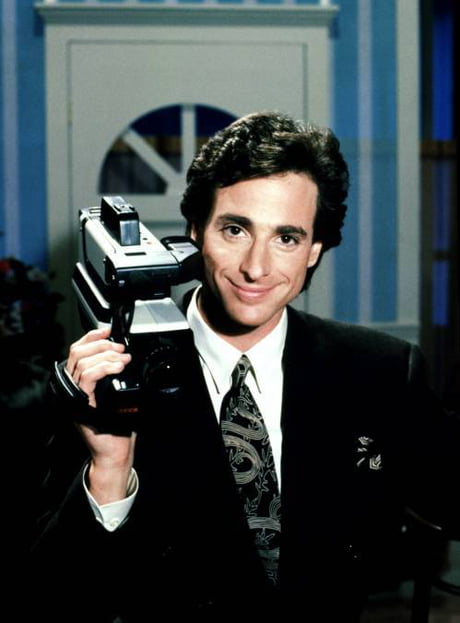
I can remember it like yesterday; gathering around the living room TV set with the entire family every time something new or interesting was set to premiere, long before Netflix or any of the numerous “plus” networks around today. And when shows like Full House and America’s FunniestHome Videos, starring/hosted by funny man Bob Saget, first dropped, I was there to take in everything each had to offer.
Saget was born on May 17, 1956 in Philadelphia, PA, where he attended film school at Temple University. In the early ’80s he appeared in random bit parts in such films and TV shows as Full Moon High (1981) and The Greatest American Hero (1983) before he received his first real “break,” albeit brief, on The Morning Show in 1987, which served as a precursor to his most famous role as morning TV host Danny Tanner on Full House, which premiered on September 22 of that same year. He also appeared alongside legendary comedian Richard Pryor in Condition Critical that year as well.
By 1989, he was America’s favorite dad, so it made sense for him to host America’s Funniest Home Videos that year, the first video clip show of its kind long before YouTube. He would maintain his hosting position up until 1997 (two years after Full House‘s cancellation), leaving big shoes to fill for everyone who has hosted since.
In 1998, he was directing the late Norm Macdonald in Dirty Work, a box office bomb but guilty pleasure none the less. He also made one of the most memorable and talked about cameo appearances to date in Half Baked, also in 1998.
He made his return to TV in 2001 with the short-lived Raising Dad, before landing a recurring role on Entourage starting in 2005, as well as narrating the main character’s voice on How I Met YourMother that year, a gig that would last him until 2014. He also returned alongside many of his former castmates for the Netflix sequel series Fuller House from 2016-2020. Saget’s most recent work was an appearance on Nickelodeon’s Unfiltered last year, and he will also be appearing posthumously in the upcoming film Killing Daniel.
Saget had just begun a stand up comedy tour when, on January 9, he was found unresponsive in his Ritz-Carlton hotel room in Orlando, FL (a forty minute drive from where I write this tribute). I don’t know why I didn’t make more effort to catch his show at the Hard Rock Live just two nights prior, but I had started kicking around interview ideas prior to his tour (something I now regret not pursuing harder).
Although there’s still many unanswered questions regarding the circumstances of his death, one thing is for certain; Saget leaves a hole in the hearts of many of us. His passing comes just days after the loss of loveable Golden Girl Betty White, and both loses are prime examples of not knowing what one has until it’s gone. Both Bob and Betty were special in their own unique ways, and their legacies are sure to stand the test of time.